The Unseen Strategists: Crafting the Role of Egyptian Advisors and Council Members as Antagonists in a Moses Game
Explore Egyptian advisors as key antagonists in a Moses game, offering strategic challenges and moral dilemmas for players.
Introduction: Setting the Stage for Antagonists Beyond Pharaoh
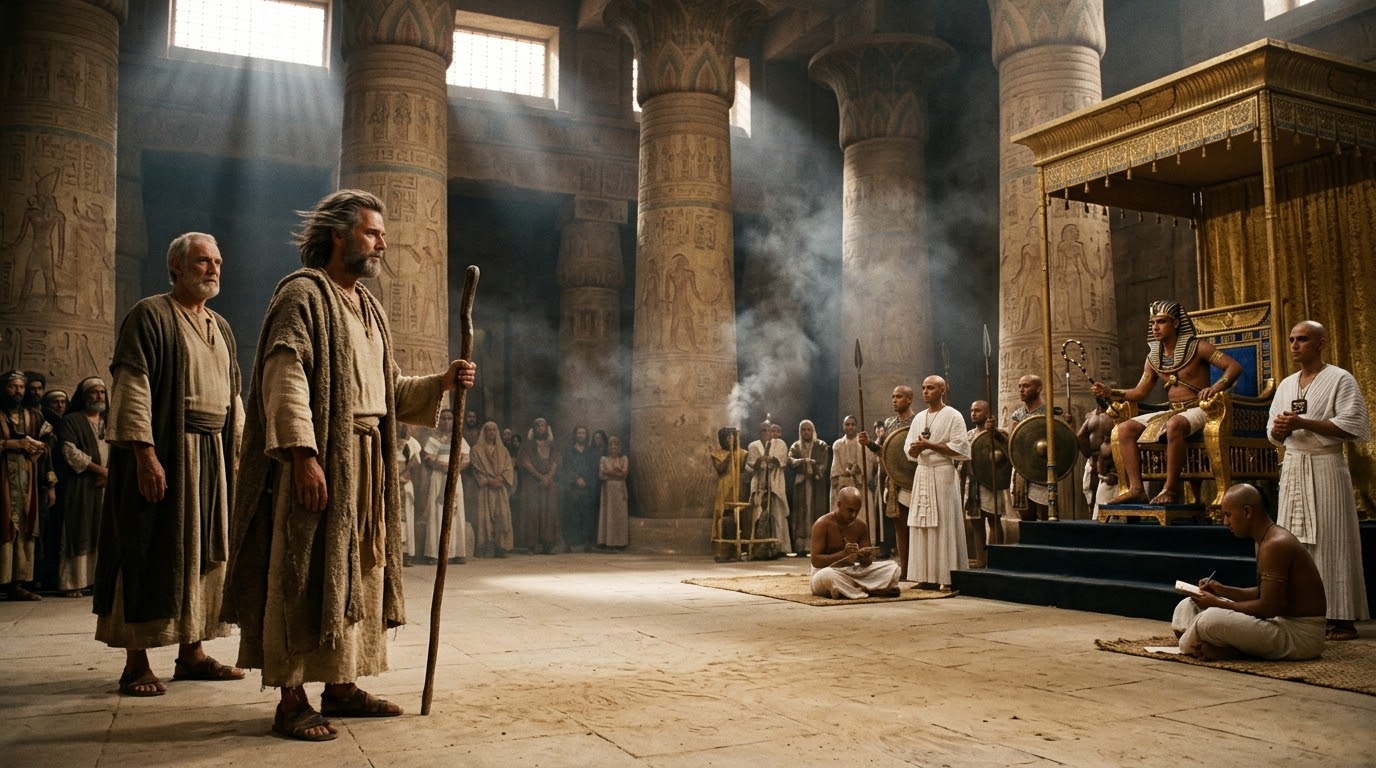
In the narrative of Moses and the Exodus, Pharaoh often stands as the central antagonist, the embodiment of oppression and resistance to divine will. However, a video game inspired by this epic tale has the opportunity to delve deeper into the political and social fabric of Ancient Egypt by introducing a cadre of strategic antagonists: the advisors and council members who wield influence behind the throne. This article explores how these figures can enrich the gaming experience, offering players a complex web of challenges and moral dilemmas that extend beyond the singular figure of Pharaoh.
Historical Context: The Influence of Advisors and Council Members
Ancient Egyptian society was not solely governed by the whims of Pharaoh. Instead, it was a sophisticated civilization with a structured bureaucracy. Historical records and scholarly interpretations suggest that advisors and council members played significant roles in shaping policy and decision-making. These officials, often holding titles such as Vizier or High Priest, were crucial in maintaining the stability of the kingdom. Their influence could sway Pharaoh’s decisions, making them powerful figures in their own right.
While the biblical narrative of Exodus does not explicitly mention these advisors, their existence is supported by historical evidence of a complex administrative system in Egypt. This opens the door for creative interpretation in a Moses-themed game, where these advisors could be portrayed as key antagonists whose loyalties and strategies the player must navigate.

Designing Strategic Conflicts: Implementing Game Mechanics
Incorporating Egyptian advisors as antagonists requires thoughtful game design that emphasizes strategy and political intrigue. These characters can be positioned as obstacles that players must outsmart or negotiate with, rather than simply overcome through combat. Possible game mechanics could include:
- Diplomatic Negotiations: Players might engage in dialogue trees or negotiation mini-games to sway advisors or gain their favor, reflecting the complex diplomacy of the time.
- Resource Management: Advisors could control crucial resources, forcing players to strategize on how to secure supplies for the Israelites’ journey.
- Espionage and Intelligence Gathering: Players could gather information about advisors’ plans, using stealth or alliances to counteract their schemes.
These mechanics not only provide variety in gameplay but also deepen the narrative, allowing players to experience the political dynamics of Ancient Egypt firsthand.
Moral Dilemmas and Narrative Tension
One of the most compelling aspects of featuring Egyptian advisors as antagonists is the potential for moral dilemmas. Unlike the clear-cut opposition represented by Pharaoh, these figures can embody shades of gray, challenging players to consider the ethical implications of their actions. For instance, an advisor might offer an alliance that benefits the player in the short term but compromises long-term goals or moral integrity.
Such dilemmas can be woven into the narrative through branching storylines, where players’ decisions impact their relationships with these characters and the overall progression of the game. This approach not only enhances replayability but also encourages players to engage with the story on a deeper level.

Player Choices and Consequences: Shaping the Exodus Narrative
The inclusion of Egyptian advisors as antagonists provides a rich canvas for player agency. By making choices that affect their standing with these figures, players can experience multiple outcomes and story arcs. For example, choosing to align with a particular advisor might secure safe passage for the Israelites through a difficult region, while alienating another could lead to increased hostility or sabotage.
These interactions should be designed to reflect the historical and cultural context of the time, with advisors representing different factions or ideologies within the Egyptian court. This not only adds depth to the game world but also allows players to explore the complexities of leadership and resistance in a nuanced way.
Conclusion: Enhancing the Player Experience Through Strategic Antagonists
By reimagining Egyptian advisors and council members as key antagonists, a Moses game can offer a richer, more engaging experience. These characters provide opportunities for strategic gameplay, moral exploration, and narrative depth that extend beyond the traditional focus on Pharaoh. As players navigate the treacherous waters of Egyptian politics, they are invited to consider the broader implications of their journey, making for a game that is as intellectually stimulating as it is entertaining.
Ultimately, the inclusion of these unseen strategists not only honors the historical complexity of Ancient Egypt but also enhances the timeless story of Moses and the Exodus, offering players a fresh perspective on a classic tale.