Commerce and Community: Realizing Egyptian Market Life in a Moses Game
Explore how a Moses game can recreate Ancient Egyptian market life to enhance worldbuilding and player immersion.
Introduction: The Role of Marketplaces in Historical and Game Contexts
In the world of video game design, creating a believable and immersive environment is pivotal for engaging players. While many games centered on Ancient Egypt focus on the grandeur of pyramids and the drama of biblical narratives, there is a profound opportunity to explore the subtler, yet equally compelling, aspects of daily life. Among these, the bustling marketplace stands out as a hub of economic and social interaction. For a game inspired by the life of Moses, integrating an authentic depiction of Egyptian market life can enhance worldbuilding and deepen player immersion, offering a window into the complexities of ancient commerce and community.
Research and Historical Sources: Market Life in Ancient Egypt
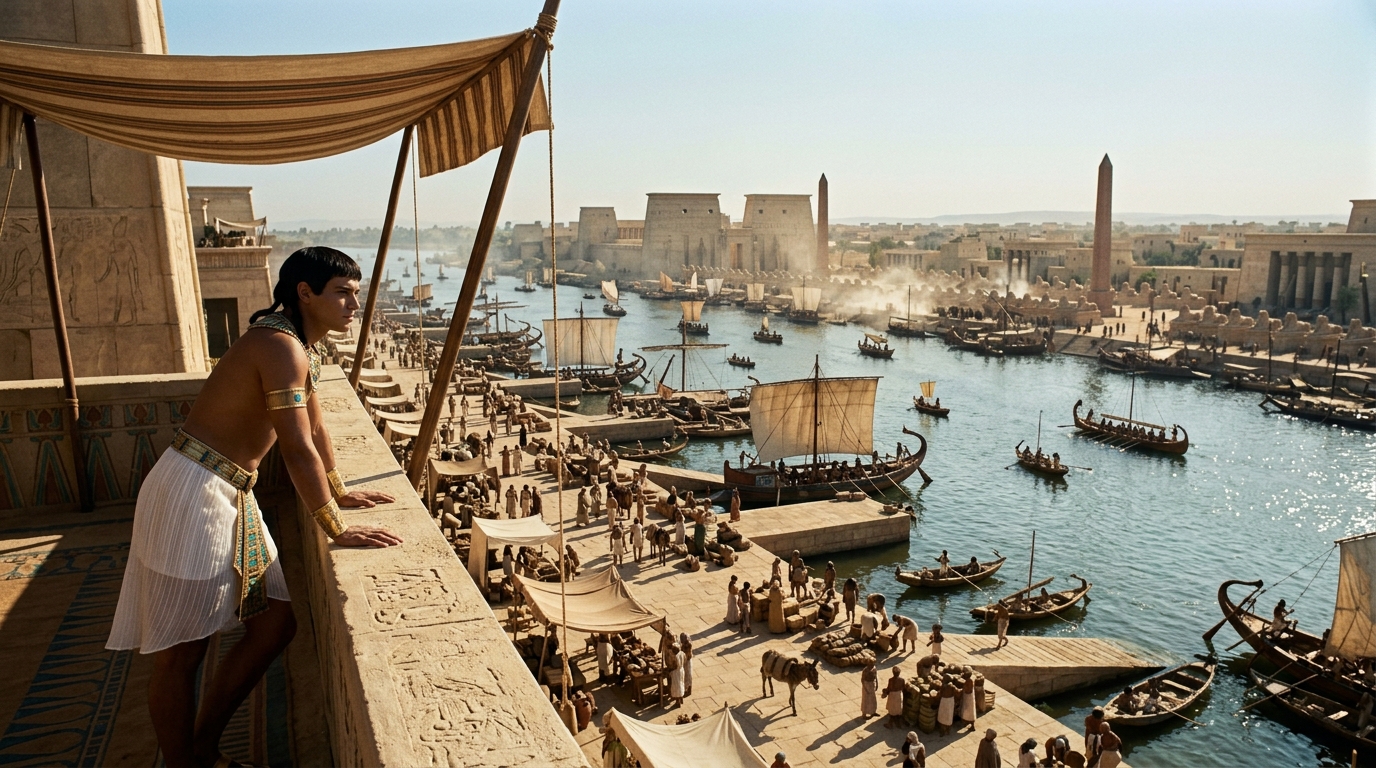
The marketplaces of Ancient Egypt were vibrant centers of daily life, where a diverse array of goods were traded, from grains and textiles to precious metals and spices. Archaeological findings reveal the existence of structured market areas within cities, often located near temples or major thoroughfares, signifying their central role in both economic and social activities. Historical records, such as papyri and inscriptions, provide insights into the roles of merchants, the variety of goods exchanged, and the economic structures that supported trade.
Incorporating these historical elements into a video game requires careful attention to detail. Developers can draw from archaeological layouts of market spaces, using artifacts and historical descriptions to populate these areas with stalls, goods, and characters that reflect the diversity of ancient Egyptian society. This not only adds authenticity but also allows players to engage with a living world that feels both dynamic and historically grounded.
Designing Interactive Market Mechanics: Engagement and Learning
To authentically depict the economic and social dynamics of an Egyptian marketplace, game developers can implement interactive market mechanics that allow players to participate in trade and commerce. Players might take on roles such as merchants or traders, navigating the complexities of supply and demand, negotiating prices, and managing resources. Such mechanics can be designed to teach players about ancient economic principles, such as barter systems and the use of currency.
Interactive market systems could also include dynamic pricing influenced by in-game events, such as harvests or political changes, encouraging players to adapt their strategies. This engagement not only enriches the player’s experience but also offers educational insights into the economic systems of the past.
Narrative Opportunities: NPCs and Player Choices in the Marketplace
Markets are not just about goods; they are about people. In a Moses game, the marketplace can serve as a rich narrative environment where players encounter diverse non-player characters (NPCs) with their own stories and agendas. These interactions can offer moral or strategic choices that impact the broader narrative, such as deciding whether to support a struggling farmer or a wealthy merchant.
By crafting complex NPC interactions, developers can explore themes of inequality and community life. Players might witness or participate in social dynamics that reflect historical realities, such as the disparities between different classes or the tension between local traders and foreign merchants. These encounters can deepen the story, providing players with a nuanced understanding of the societal structures in Ancient Egypt.
Worldbuilding and Atmosphere: Bringing Egyptian Commerce to Life
The atmosphere of an Egyptian marketplace can be brought to life through meticulous worldbuilding. This involves creating a sensory experience that immerses players in the sights, sounds, and smells of the market. Ambient soundscapes might include the chatter of bargaining, the clatter of goods being moved, and the distant sounds of religious ceremonies from nearby temples.
Visual design plays a crucial role, with vibrant stalls displaying a variety of goods, from colorful textiles to exotic spices. The inclusion of environmental storytelling elements, such as signs of recent trade caravans or remnants of a bustling market day, can further enhance immersion. By capturing the essence of ancient commerce, developers can transport players to a time and place that feels both authentic and alive.
Conclusion: Impact of an Authentic Marketplace on Player Experience
Integrating a realistic depiction of Egyptian market life in a Moses game offers more than just a backdrop for action; it provides a lens through which players can explore the intricacies of ancient society. By focusing on commerce and community, developers can create a game that not only entertains but also educates, offering players a richer, more immersive experience.
Such an approach encourages players to think critically about historical and social dynamics, fostering a deeper understanding of the world Moses inhabited. As players navigate the bustling marketplaces, they become part of a living history, where every trade and interaction contributes to a broader narrative tapestry. In doing so, a Moses game can transcend traditional storytelling, offering a unique blend of education and entertainment that resonates long after the game is turned off.